
Are you considering a career in property management? If so, you’re in the right place! The real estate industry is booming, especially in Texas, where the demand for skilled property managers is rising. Whether you’re interested in managing residential apartments, single-family homes, or commercial properties, becoming a property manager in Texas can be a rewarding career path. In this comprehensive guide, we’ll walk you through everything you need to know about how to become a property manager in Texas, including the necessary licensing, certification options, and best practices to ensure your success.
Keep reading to find out more!
Yes — if you manage property owned by others for compensation. Leasing, showing units, or handling rent for another owner is real estate brokerage under Tex. Occ. Code § 1101, so you need a Sales Agent license (sponsored by a broker), or a Broker license to run your own property management firm. You can manage your own property, or work as a salaried on-site apartment manager, with no license (§ 1101.005). The first step is the 180-hour Sales Agent pre-license course.
Why Become a Property Manager in Texas?
Before diving into the nitty-gritty details, let’s discuss why becoming a property manager in Texas is a great opportunity. The Texas real estate market is thriving, thanks to its robust economy and increasing population. This growth translates to a steady demand for rental properties, which means skilled property managers are essential. Additionally, property management can be a lucrative career for you to follow.
The average salary for property managers in Texas sits at $54,348 per year, according to figures from ZipRecruiter in 2026. While this average provides a solid income, salaries for property managers vary widely across Texas, depending on location, property type, and experience. On the lower end, entry-level positions may earn around $26,086 annually, while seasoned professionals in high-demand areas can make up to $77,793. This range highlights the potential when considering to become a property manager. There are plenty of opportunities to increase your earnings with additional experience and skills and by managing larger or more complex properties.
Certain cities in Texas offer handsome salaries for property managers. According to data from ZipRecruiter, Manor tops the list, where property managers earn an average of $64,335 annually, which is approximately 15.6% above the state average. La Grange and Cleburne follow closely, with salaries around 10% higher than the Texas average. Other cities in the top ten, such as Florence, Hutto, and Victoria, also offer above-average pay. While the pay difference across these cities is relatively small, with a variation of about 9% from highest to lowest, relocating to one of these cities could lead to a higher income and potentially lower living costs than major metropolitan areas.
Understanding Property Management in Texas
Property management involves overseeing residential and commercial properties on behalf of owners. Responsibilities typically include:
- Marketing properties to attract tenants
- Screening tenants to find the right fit
- Collecting rent and managing financial transactions
- Maintaining properties and ensuring they are in good condition
- Handling tenant relations and addressing issues that arise
To effectively perform these duties, it’s crucial that you understand the property management laws in Texas and the specific requirements that govern the industry.
Property Management Laws in Texas
There are two critical pieces of Texas legislation that outline when a property manager needs a real estate license:
- TRELA §1101.002(1)(A)(x): This law requires a broker license if you control the acceptance or deposit of rent from a single-family residential property unit.
- Texas Administrative Code Rule 535.4: To comply with this rule, you will need a real estate sales agent or broker license to:
- Operate a rental agency
- Show properties
- Solicit or negotiate listings
- Use rent to pay for services related to a single-family home
- Deposit rent from a single-family home
- Arrange for a tenant to lease a residential unit unless you own it or lease it from the owner
However, if you own the property, you can rent it out without a license. Employees who work for licensed employers can manage and lease property as long as the employer holds a valid real estate license. These exemptions — including the on-site apartment-complex manager and the owner or an employee of the owner — are set out in Tex. Occ. Code § 1101.005.
Texas Property Management Requirements
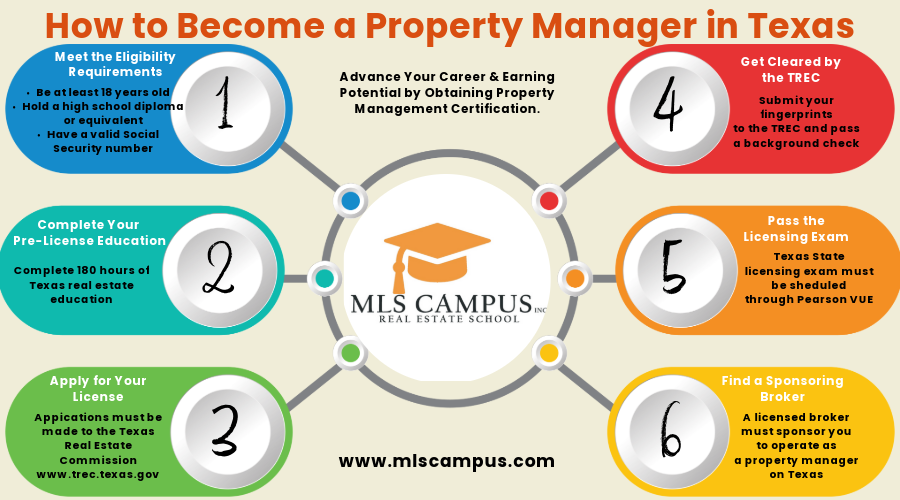
If you decide to pursue a career as a property manager, it’s essential to understand the Texas property management requirements. Here’s a step-by-step breakdown of how to become a property manager in Texas:
- Step 1: Meet the Eligibility Requirements
- Step 2: Complete the Required Pre-License Education
- Step 3: Apply for Your License
- Step 4: Get Cleared by the TREC
- Step 5: Pass the Licensing Exam
- Step 6: Find a Sponsoring Broker
Step 1: Meet the Eligibility Requirements
Before you can become a property manager in Texas, you must meet specific eligibility criteria. You need to:
- Be at least 18 years old
- Hold a high school diploma or equivalent
- Have a valid Social Security number
- Be a citizen of the United States or a lawfully admitted alien
Step 2: Complete the Required Pre-License Education
You must complete a Texas real estate pre-licensing course to get your property management license. Texas requires you to complete 180 hours of real estate education covering various topics, including property law, ethics, finance, and marketing.
You can take these courses online with MLS Campus and study at your own pace, making it convenient for you to fit into your schedule. Once you’ve completed the required hours, you will be eligible to take the licensing exam.
Step 3: Apply for Your License
Once you finish your Texas real estate pre-licensing course, it’s time to apply for your Texas real estate license. This application is called the “Inactive Real Estate Sales Agent License” (Form ID: ISL-9). The term “inactive” simply means that you don’t yet have your license.
You can find the application online on the Texas Real Estate Commission (TREC) website. Make sure to fill it out accurately to avoid any delays.
Step 4: Get Cleared by the TREC
After submitting your application, you will need to undergo a background check. The TREC requires you to get fingerprinted, allowing them to check your criminal history. This step is crucial as it ensures you will conduct yourself ethically and responsibly as a property manager.
Step 5: Pass the Licensing Exam
The next step in how to become a property manager in Texas is to pass the licensing exam. The TREC has contracted Pearson VUE to administer this exam. It can be a bit daunting, so it’s advisable to prepare thoroughly.
Study materials, candidate handbooks, and exam scheduling options are found on the TREC website. Many aspiring property managers find it beneficial to use test prep kits to help them get ready. At MLS Campus, we offer free practice exams as part of all our pre-license courses. We also provide additional exam prep and math cram courses.
Step 6: Find a Sponsoring Broker
Once you pass the exam, you need to find a broker to work for. This step is essential because a licensed broker must sponsor you to operate as a property manager in Texas. A sponsoring broker can guide you through your initial career steps and help you gain the necessary experience in the field.
If you need any help or advice in finding a sponsoring broker in Texas, you can get in touch with our friendly support team.
For more information on obtaining your real estate license in Texas, including the costs, application process, and valuable links, follow the link to our comprehensive guide – How to Get a Texas Real Estate License.
Consider Obtaining Property Management Certification in Texas
While not required, obtaining a property management certification in Texas can give you a competitive edge in the job market. Here are some popular certifications you might consider:
National Association of Residential Property Managers (NARPM) Certifications:
Residential Management Professional (RMP): This certification demonstrates your expertise in residential property management.
Master Property Manager (MPM): This is an advanced certification for experienced property managers.
National Apartment Association (NAA) Certifications:
Certified Apartment Manager (CAM): This certification focuses on managing apartment communities.
Texas property management certification enhances your credibility and shows potential employers that you are committed to continuing your education and staying current with industry standards.
If you are already licensed, MLS Campus also offers a dedicated Texas 30-hour Property Management qualifying course to help you specialize.
Starting Your Career in Property Management
After completing the steps above, you are ready to start your career in property management. Whether you decide to work for an established company or start your own property management business, here are some tips to help you succeed:
- Network: Attend industry events and join professional associations like NARPM or the Texas Apartment Association (TAA). Networking can lead to job opportunities and valuable partnerships.
- Stay Informed: Keep up with changes in property management laws in Texas and trends in the real estate market. Continuous education is vital for your success.
- Develop Strong Communication Skills: As a property manager, you’ll need to communicate effectively with tenants, property owners, and contractors. Good communication can help you build strong relationships and resolve conflicts efficiently.
- Utilize Technology: Consider using property management software to streamline operations such as tenant screening, rent collection, and maintenance requests.
- Focus on Customer Service: Excellent customer service will help you retain tenants and attract new ones. Be responsive to tenant needs and concerns to create a positive living environment.
- Market Your Services: If you choose to start your own property management business, invest in marketing strategies to promote your services. Consider creating a website, utilizing social media, and networking in your community to reach potential clients.
Becoming a Property Manager in Texas – Frequently Asked Questions
Do I need a license to be a property manager in Texas?
How long does it take to become a property manager in Texas?
How much does it cost to become a property manager in Texas?
What are the typical duties of a property manager in Texas?
Do you need a license to start a property management company in Texas?
MLS Campus: Texas Pre License Education
Take the next step in becoming a property manager in Texas. Property management is a rewarding career choice that offers numerous opportunities for growth and success. By understanding the licensing requirements, pursuing relevant certifications, and mastering best practices in the industry, you can position yourself for a successful career. So, are you ready to take the first step toward your new career? Start your journey today and become a property manager in Texas!
Enroll in your Texas real estate pre-licensing course now! MLS Campus offers a wide range of course packages, including full audio courses, exam preparation, math cram, and more. Our interactive platform provides a convenient and effective method of completing your property management education requirements while managing a busy work/life schedule. For more information, get in touch with our support team today.
Customer Support: Call us at (877) 331-6235 or Contact us by Email
If we can assist you with Technical Support, General License Inquiries or Questions about Course Material please contact us.
Questions about course material: An Instructor is available Monday through Friday a week from 9 am to 7 pm (EST)
Technical Support or any other questions: Our office staff are available Monday through Friday a week from 9 am to 7 pm (EST)
We do our best to reply promptly to emails on Weekends
*Except for Major Holidays
Join Over 100,000 Students Enroll With MLS Campus now
Become Part of MLS Campus School to Further Your Career.
Ready to get your Texas real estate license?
Study online at your own pace with state-approved, instructor-supported courses. Browse the Texas packages or head back to our homepage to explore everything MLS Campus offers.